
AC Running but Not Cooling? Common Causes in Florida Homes

If your AC is running but not cooling, the cause is usually one of five things: a thermostat setting, a dirty air filter, a frozen evaporator coil, an outdoor unit that has stopped while the indoor fan keeps blowing, or a refrigerant leak. The first two you can check yourself in a few minutes. The rest are mechanical or electrical problems that need a qualified HVAC technician, and catching them early on a hot South Florida afternoon can keep a small repair from turning into a bigger one.
What should you check first?
Before you call anyone, walk through these quick checks. They take a few minutes, and none of them involve opening the equipment.
Thermostat mode: make sure it says Cool, not Heat, Fan or Off, and that the setpoint is a few degrees below the current room temperature.
Fan setting: if the fan is set to “On”, it runs even when the system isn’t cooling, so the air between cycles can feel warm. Set it to “Auto”.
Thermostat power: replace the batteries if the display is faint or blank.
Air filter: hold it up to the light. If you can’t see through it, replace it.
Breakers: most systems have one breaker for the indoor unit and one for the outdoor unit. Reset a tripped breaker once. If it trips again, leave it off and call.
Vents and returns: make sure furniture, rugs or curtains aren’t blocking them.
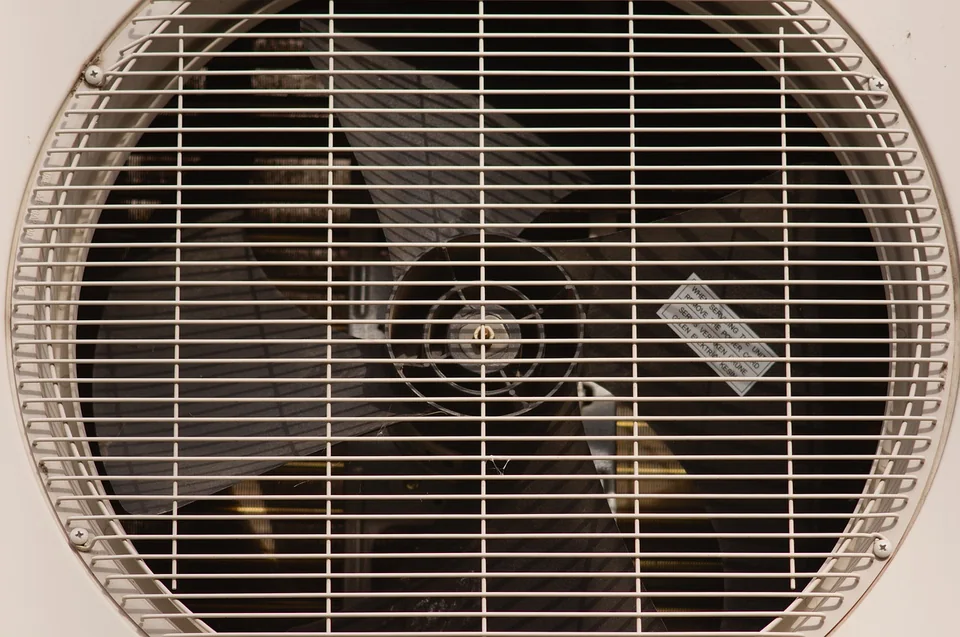
Then step outside and look at the condenser, the outdoor unit. With the thermostat calling for cooling, its fan should be spinning and you should hear the compressor running. What you find there tells you a lot about the next step.
Is the outdoor unit running?
The outdoor unit holds the compressor and the condenser fan, the parts that actually move heat out of your house. If the indoor blower is pushing air but the outdoor unit is silent, you’ll feel room-temperature air at the vents and the house will slowly warm up.
Common reasons the outdoor unit stops include a tripped breaker, a failed capacitor, a worn contactor and wiring damaged by a power surge during a summer storm. Capacitors in particular take a beating from our heat and long run times. In some homes, a float switch on a clogged condensate drain is wired to shut off only the outdoor unit while the indoor fan keeps running, so a backed-up drain can look exactly like a cooling failure. Our guide to a clogged AC drain line in Florida covers that case.
If the outdoor unit is buzzing loudly but its fan isn’t turning, turn the system off at the thermostat right away. A unit left buzzing can overheat and damage the compressor. Capacitors can hold a dangerous electrical charge even with the power off, so this is a job for a qualified HVAC technician, not a screwdriver. If it happens on a hot night, Local Climate Control provides emergency AC repair in Martin County 24/7.
Could your evaporator coil be frozen?
If the outdoor unit is running but the air inside still isn’t cold, the indoor coil may be covered in ice. Ice forms when airflow across the coil drops too low, usually from a dirty filter, blocked vents or a dirty coil, or when the system is low on refrigerant. A frozen coil blocks airflow even further, so the problem feeds itself.
Look for frost or ice on the larger copper refrigerant line at the outdoor unit, weak airflow at the vents, or water pooling around the indoor unit as ice melts. If you see any of these, set the thermostat to off and the fan to on so the ice can thaw, and read our step-by-step guide to a frozen AC evaporator coil before you run cooling again.
Is your AC low on refrigerant?
Refrigerant circulates in a sealed loop. It isn’t used up like fuel, so a system that is low on refrigerant has a leak somewhere. Near the coast, salt-driven corrosion on the coil can create pinhole leaks. Elsewhere, leaks often show up at joints, valves and copper lines that have rubbed against something for years.
Signs of a leak include a hissing or bubbling sound, ice on the coil or lines, long run times and a house that never reaches the temperature you set. The right repair is to find and fix the leak, then restore the correct charge. Adding refrigerant without repairing the leak only delays the next breakdown, and any refrigerant work calls for a qualified HVAC technician.
Can dirty coils or leaky ducts stop your AC from cooling?
A dirty or blocked outdoor coil
The outdoor coil has to shed the heat your system pulls out of the house. Grass clippings, leaves, pollen and salt film all make that harder. A system with a dirty condenser coil keeps running, but it cools weakly and works harder doing it. Trimming shrubs back and rinsing the coil gently with a garden hose, with the system off, both help.
Leaking or disconnected ductwork
If the equipment is cooling but certain rooms stay warm, the cold air may be escaping before it reaches them. Ducts in hot attics can split, sag or come apart at the joints, dumping cooled air into the attic instead of your living space. Ductwork repair restores that airflow.
A system that can’t keep up
On the hottest afternoons, even a healthy system may run continuously and sit a degree or two above the setpoint, then catch up in the evening. If the house never recovers after sunset, or the gap keeps widening day after day, the system has lost capacity and needs a diagnosis.
Get a straight answer from Mike and Joe
Local Climate Control handles AC service calls in Stuart, Palm City, Jensen Beach and Hobe Sound in Martin County and in Port St. Lucie in St. Lucie County. Owners Mike Hanrahan and Joe Sisto diagnose the actual cause, explain the repair before any work starts and skip the replacement pressure. Call Mike at (772) 285-6296 or Joe at (561) 895-0339, or request service. Same-day service is available. For more on keeping your system healthy all year, see our guide to keeping a coastal Florida AC healthy.

Comments